Scams in Blockchain: Navigating a Decentralized Environment
Blockchain technology has revolutionized financial transactions, offering transparency and independence from intermediaries. However, this…
Blockchain technology has revolutionized financial transactions, offering transparency and independence from intermediaries. However, this shift towards decentralization also echoes the past, like bartering goods in pre-modern markets, but now with digital records.
This scenario is reminiscent of the 19th-century Gold Rush, where miners directly traded gold for goods and services, often at the mercy of an unregulated system. In this article, we delve into the scams that have emerged in the crypto world and highlight the importance of safeguarding assets in this new, decentralized landscape.
The Double-Edged Sword of Eliminating Intermediaries
While removing intermediaries brings many benefits, it also resurrects old risks, often exploited by malicious actors. Blockchain allows us to bypass these middlemen, but it also opens the door to those with ill intentions.
Scams Amidst the NFT Craze:
During the NFT boom, scams proliferated. Fraudsters often posed as legitimate opportunities, luring users with contracts that promised lucrative returns but instead led to asset theft. Inexperienced users, driven by the allure of quick profits, were particularly vulnerable.
A typical scam involved counterfeit NFTs on exchange platforms. These NFTs, mimicking popular projects, were part of deceptive offers that tricked users into trading valuable assets for worthless imitations.
More sophisticated scams involved applications offering services like converting 2D NFTs to 3D or creating unique animations. These required users to connect their wallets and sign contracts, ultimately leading to asset theft.
The Seed Phrase Trap:
In this clever ruse, victims receive a seed phrase leading to a wallet seemingly containing substantial funds. Driven by curiosity and the prospect of unexpected wealth, users attempt to transfer these funds, only to find they’re inaccessible. The scam culminates when users deposit a small amount of ETH to cover transaction costs, which is promptly stolen.
The BAYC Loan Strategy:
A notable case involves the Bored Ape Yacht Club (BAYC) project, where NFT owners could claim the new $APE token. One individual capitalized on this by borrowing unclaimed NFTs from a lending platform, claiming the tokens, then returning the NFTs while keeping the $APE. View the transaction here.
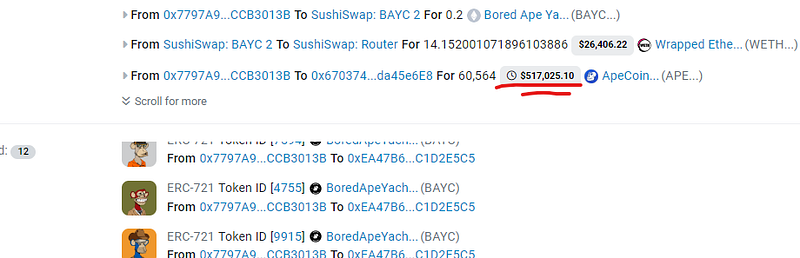
This raises ethical questions: Is this a clever use of the system, or does it border on theft? The terms of the lending platform may permit such actions, but the moral implications remain debatable.
Conclusion:
As blockchain evolves, so do the strategies of scammers. Staying informed and cautious is key to protecting our assets in this decentralized world. When developing new tools, we must weigh the pros and cons of decentralization, ensuring we create a safe and equitable digital ecosystem.